
Almost every modular kitchen company calls itself the best. That makes “top-rated” a confusing label, because the biggest name is not always the right fit for your home, your room, or your budget.
This guide from Double Tree Kitchens explains what a top-rated brand really means, how to judge one properly, and why a local custom manufacturer often gives better value than a famous logo.
What “Top-Rated” Actually Means for a Modular Kitchen
A high rating should reflect real quality, including build strength, material, fit, service, and value for money. Too often it just reflects marketing budget and brand recall instead.
The truth is that the best brand for one home can be the wrong choice for another. A large family kitchen, a compact flat, and a rental property all have different needs, so “top-rated” only matters once you define what you actually need.
How to Judge a Modular Kitchen Brand
Before comparing names, it helps to compare on the things that decide how a kitchen performs over ten years. These factors matter far more than a polished showroom display.
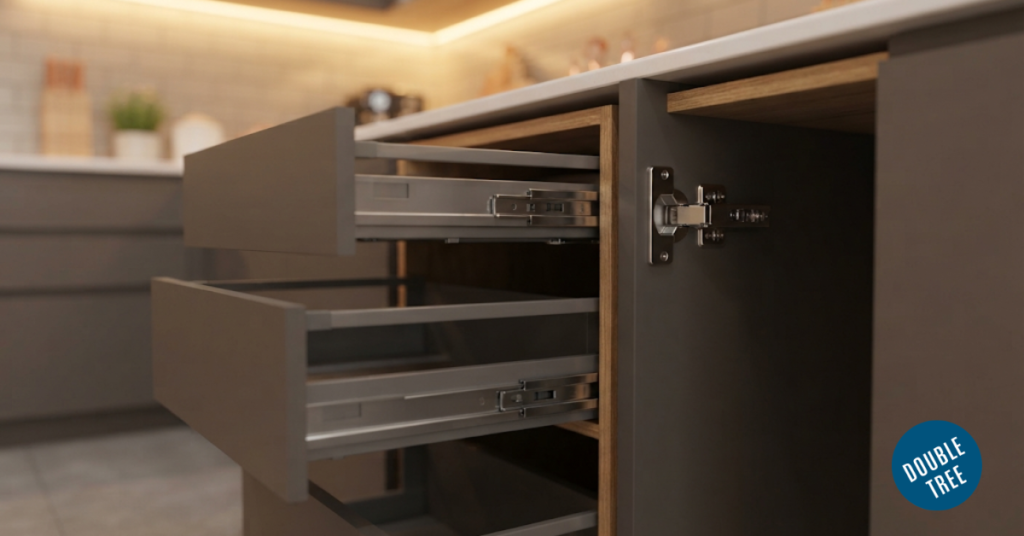
Judge any brand on:
- Core material: Plywood, MDF, or particle board, and the thickness used.
- Hardware: The brand of hinges and channels, plus the warranty.
- Fit: Whether the kitchen is made to measure or built to fixed sizes.
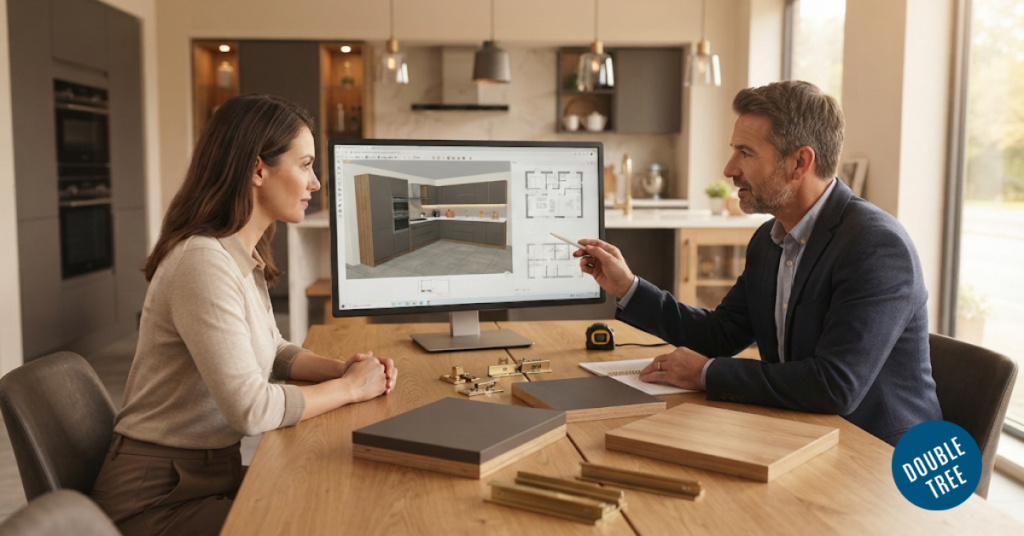
- Design support: Access to 2D and 3D designs before manufacturing.
- Service: Who handles installation and after-sales issues.
- Pricing: Whether the quote is clear, itemised, and honest.
A brand that scores well on these will outlast one that simply looks good in an advertisement. The catch is that most of this quality is invisible in a showroom, so you have to ask rather than assume.
Two factors carry the most weight over time. Core material decides whether cabinets survive years of steam and spills, and hardware decides whether drawers and doors still work smoothly after daily use.
Well-Known National Modular Kitchen Brands
Many buyers begin their search with the large national brands they have seen advertised. These companies usually operate across India through dealer and franchise networks rather than direct factories.
Their strengths and limits tend to follow a pattern:
- Strengths: Recognisable name, showroom presence, and standardised ranges.
- Limits: Dealer markups, fixed catalogue sizes, and slower custom changes.
National brands can be a safe starting point, but the dealer model often adds cost and distance between you and the people actually building your kitchen. When something needs fixing later, that distance is exactly where the frustration begins.
The Case for Local and Custom Manufacturers
A good local manufacturer can match or beat national brands on quality while offering things they structurally cannot. Because you deal with the maker directly, the whole process is closer and more accountable.
Local custom makers often provide:
- Factory-direct pricing with no dealer or franchise markup.
- Made-to-measure fit for irregular Indian rooms with pillars and beams.
- Direct accountability for material, build, and service.
- Faster revisions because you talk to the people doing the work.
For many homeowners, this combination of price, fit, and responsiveness ends up being the real definition of top-rated.
The trade-off is that quality varies more among local makers, so vetting matters. A strong local manufacturer with its own factory and reliable material supply is the best of both worlds, while a weak one cutting corners on plywood is worse than any national brand.
Why Material Supply Matters More Than the Logo
A modular kitchen is only as good as the plywood inside it. A famous brand name means little if the core board warps, swells, or fails after a couple of monsoons.
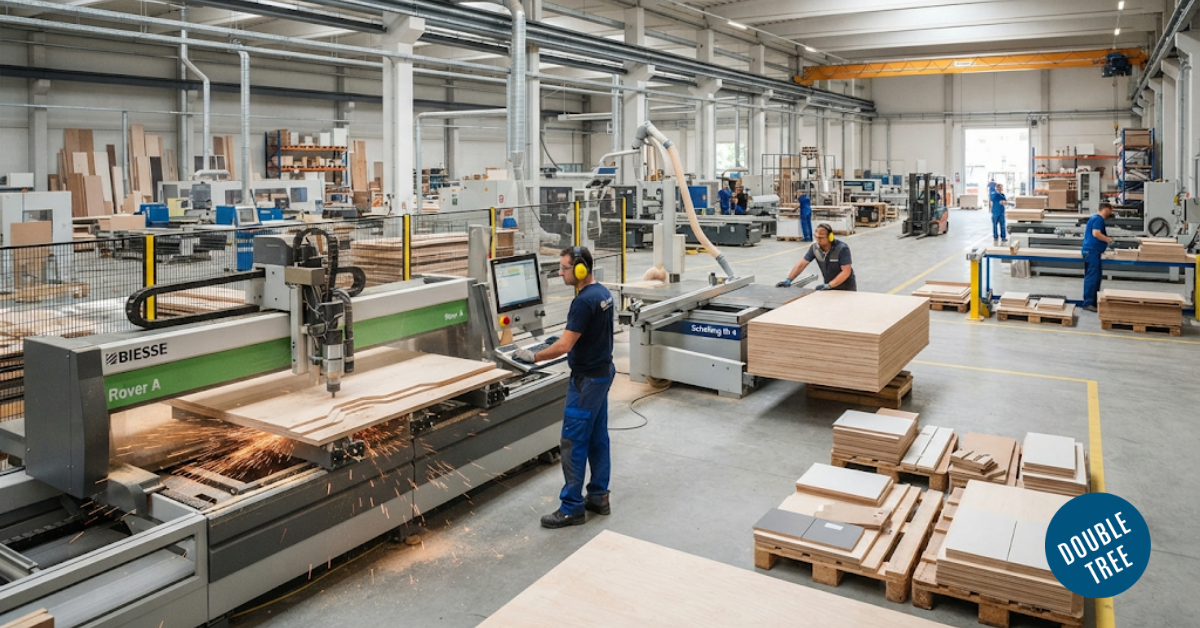
This is where material supply becomes a hidden advantage. Double Tree Kitchens sources calibrated club prime plywood directly through its parent company, Kuldeep Plywood Industries, which gives control over quality and supply that most brands, working through third-party vendors, simply do not have.
Calibration matters more than buyers realise too. Boards sanded to a uniform thickness let cabinets sit flush and hardware fit precisely, and controlling the plywood supply keeps that standard on every single unit rather than hoping a vendor delivers consistent stock.
Questions to Ask Before You Pick a Brand
The fastest way to separate a serious maker from a weak one is to ask direct questions. Confident, specific answers signal a brand that stands behind its work.
Ask every shortlisted brand:
- What core material and thickness do you use?
- Which hardware brand do you fit, and what warranty comes with it?
- Is the kitchen made to measure or built to standard sizes?
- Will I see a 3D design before manufacturing begins?
- Who handles installation and after-sales service?
If a brand answers these clearly and puts them in writing, it is already ahead of most of the market. Vague or shifting answers usually mean the details will disappoint you later.
Red Flags to Watch For
Some warning signs show up early if you know what to look for. Spotting them saves you from an expensive mistake that only appears months after installation.
Be cautious when you see:
- Vague material answers or refusal to name the plywood grade.
- No written warranty on cabinets or hardware.
- Pressure to skip on-site measurement before quoting.
- Prices that seem far too low to cover quality material.
A genuine top-rated brand welcomes these questions instead of dodging them. If a salesperson rushes you past them, treat that as the answer itself.
Matching the Brand to Your Budget and Home
The right brand is the one that fits your budget, your room, and how long you plan to stay in the home. There is no single best answer that works for everyone.
If you are renovating for the long term, investing in a made-to-measure kitchen with quality plywood pays off for years of daily use. For a shorter stay or a rental, a simpler standard build may make more sense. The goal is value that matches your situation, not the most expensive name on the market.
How to Compare Your Shortlist Fairly
Once you have two or three options, compare them side by side on the same points instead of on how nice each showroom looked. A simple written comparison keeps the decision honest.
Put each brand against the same checklist:
- Material and warranty in writing, not verbally promised.
- Total itemised price, including hardware, accessories, and installation.
- Design and revision process before any payment.
- Timeline from order to finished installation.
Seen this way, the strongest choice usually becomes obvious, and it is often not the one with the loudest advertising.
Choosing a Modular Kitchen Partner You Can Trust
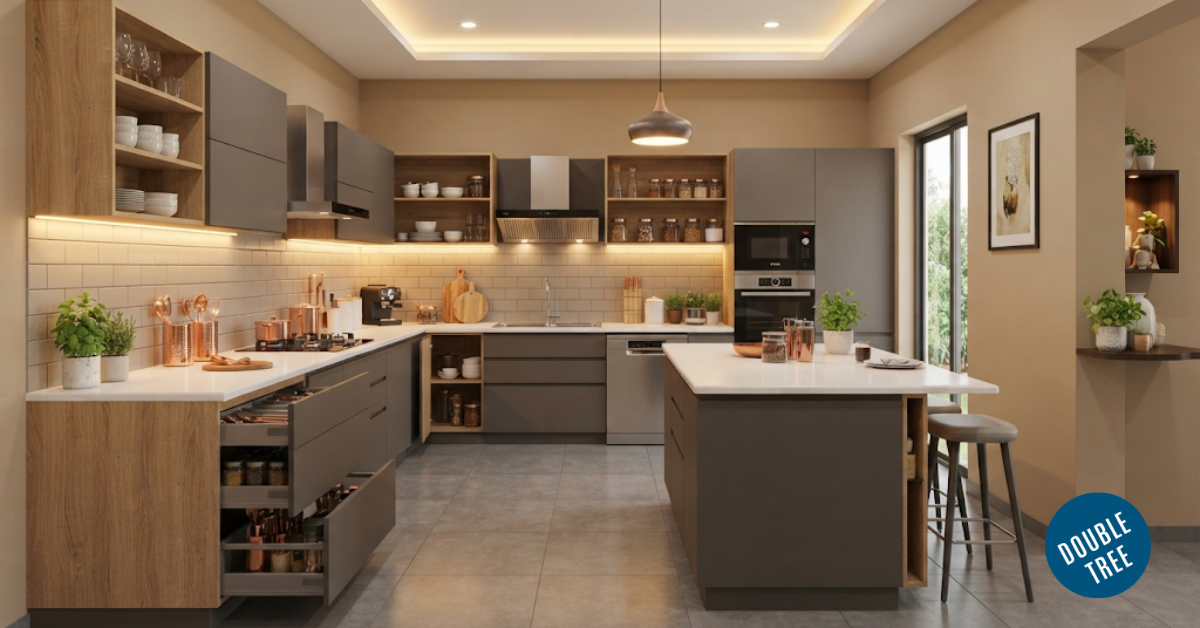
A top-rated modular kitchen brand is not always the loudest one. It is the maker that fits your space, holds to real material standards, and stays reachable when you need service later.
If you are planning a modular kitchen in Lucknow, Double Tree Kitchens offers a factory-direct, made-to-measure option backed by premium calibrated plywood through Kuldeep Plywood Industries. Reach out for a design consultation and judge us on the same questions you would ask any brand.