
Renovating a home in Lucknow usually comes down to one big kitchen decision. Do you call a local carpenter to build everything on-site, or go with a modular setup that arrives ready to fit? For years the carpenter route was the only path most families knew, but that has changed as more homes shift toward factory-built kitchens.
Advantages of Modular Kitchens
Modular kitchens now lead in most new builds and remodels, and the reasons are practical rather than just about looks. This guide breaks down where modular pulls ahead, where traditional still holds on, and how to pick what actually suits your home and budget.
What Is a Modular Kitchen vs a Traditional Kitchen
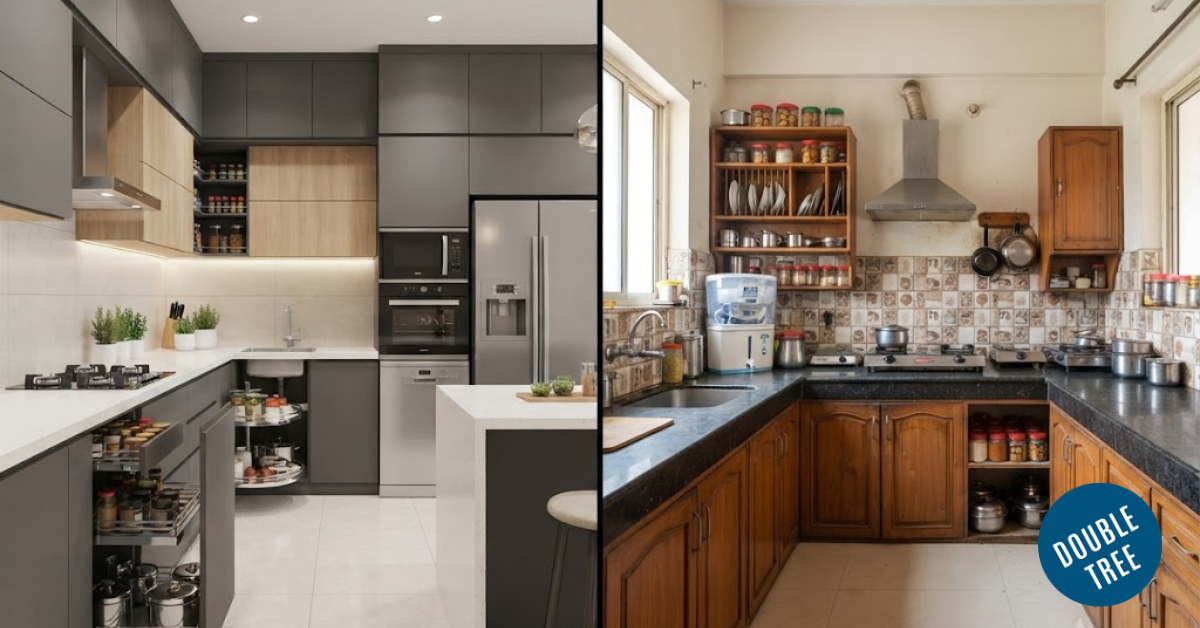
A traditional kitchen is built at your home. A carpenter measures the space, cuts wood on-site, and assembles cabinets over several weeks, with everything fixed in place and hard to move later. The result depends heavily on the person doing the work.
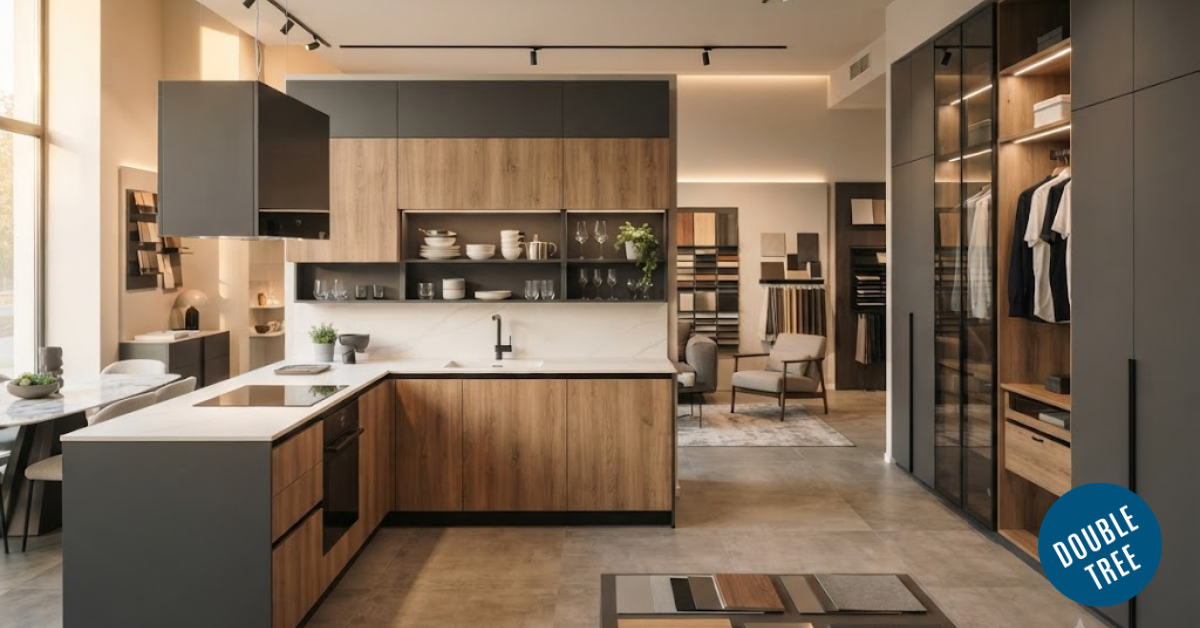
A modular kitchen is made in a factory as separate units. Each cabinet, drawer, and shelf is machine-cut, finished, and then brought home for assembly. The design is locked before any cutting starts, so what you approve on screen is close to what you get in your kitchen.
Smarter Use of Every Inch
Small flats and compact kitchens are common across Lucknow, and modular units are built for exactly this problem. Instead of leaving dead corners and awkward gaps, modular design fills them with purpose-built storage that a hand-built kitchen struggles to match.
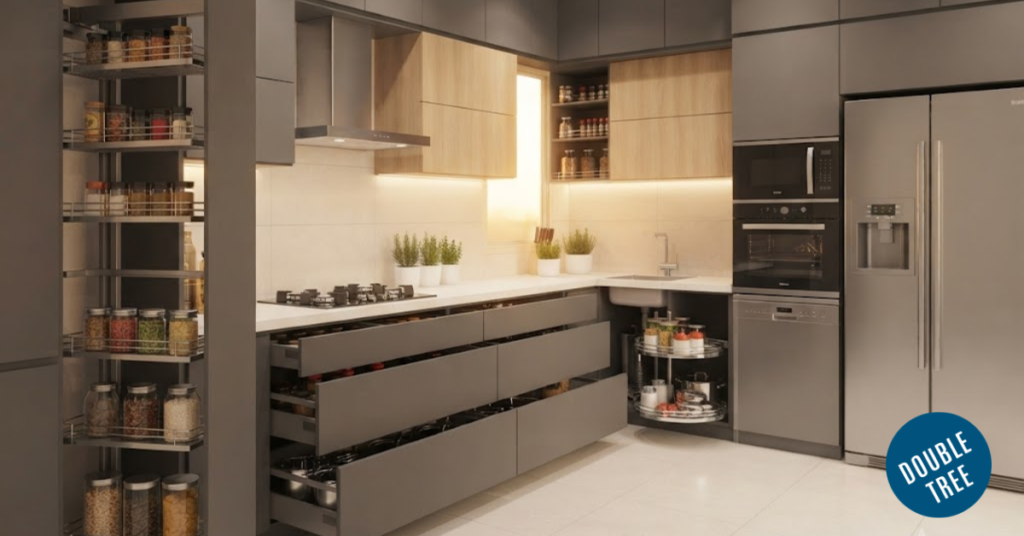
Common space-saving features include:
- Pull-out baskets and tall pantry units for narrow gaps
- Corner carousels that reach the back of blind corners
- Overhead cabinets that use vertical wall space
- Drawer stacks that hold more than open shelves
A carpenter can attempt some of these, but factory tooling produces them more precisely and in far more variety, which is why the same floor plan often holds more in a modular layout.
Faster Installation With Less Mess
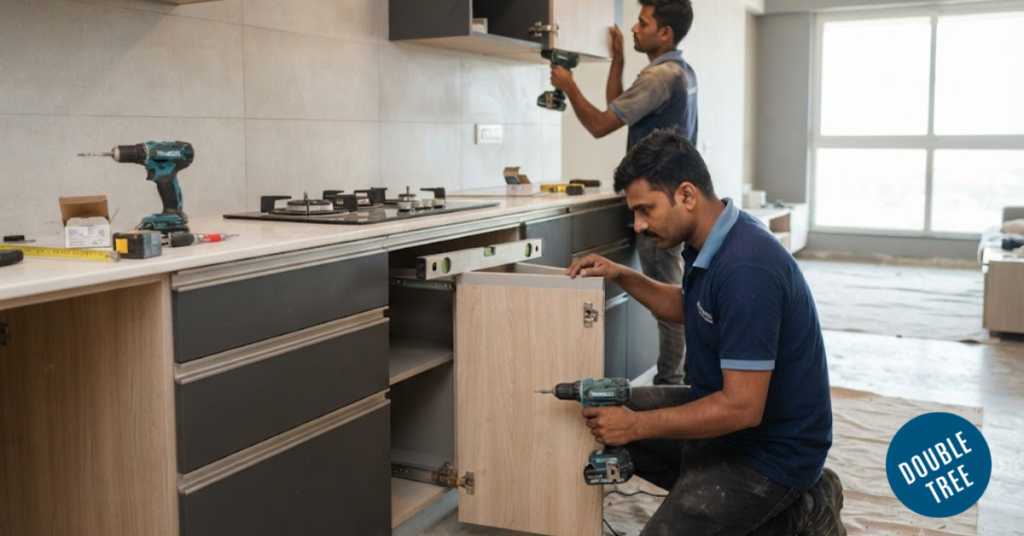
On-site carpentry can take three to six weeks, and your home lives with sawdust, noise, and open tools the whole time. Modular kitchens flip this, since the bulk of the work happens in the factory and the home stage is mostly fitting and fixing the finished units.
Most modular kitchens go from delivery to fully installed in a few days once the site is ready. For families who cannot shut down their kitchen for a month, or who are moving into a new flat on a deadline, this speed alone is a strong reason to switch.
Consistent Quality You Can Trust
Hand-built kitchens depend entirely on one carpenter’s skill on a given day. Cuts vary, finishes vary, and a small mistake can throw off a whole run of cabinets. Factory production removes most of that risk with machine-cut plywood and calibrated boards that match panel to panel.
At Double Tree Kitchens the material comes through our parent company, Kuldeep Plywood Industries, which keeps the plywood grade steady and the supply on time. That kind of control over raw material is hard to reach on a job site, and it shows in how the cabinets hold up over the years.
Design Locked In Before You Build
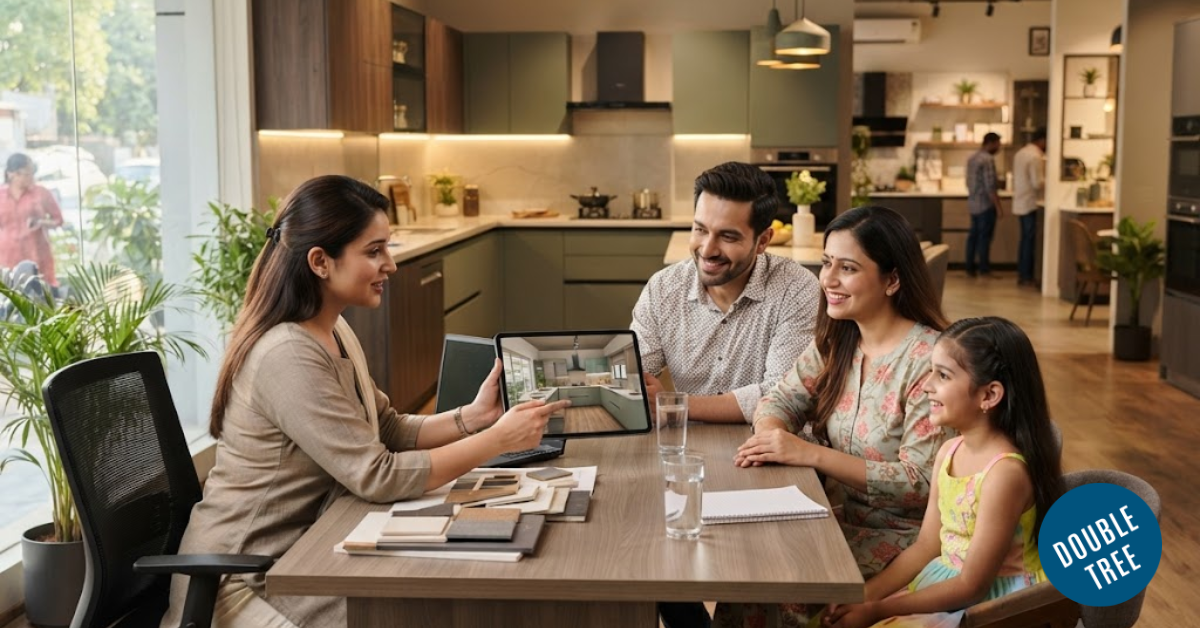
With modular, you see 2D and 3D designs before anyone cuts a board. You choose the layout, finishes, colours, and handle style, then approve the full plan. Nothing is left to guesswork or to how a carpenter reads your rough sketch on paper.
This matters because kitchen mistakes are costly and slow to undo once cabinets are fixed. Seeing the whole plan first means fewer surprises, a cleaner fit around appliances, and a result that matches how you actually cook, store, and move around the space.
Easy to Maintain and Repair
If one drawer front chips or a hinge fails in a modular kitchen, you replace that single unit and the rest stays untouched. Traditional built-in kitchens rarely allow this, since everything is joined together on-site as one fixed structure.
This modular structure keeps repair costs low over the years. You are fixing one part rather than reworking a whole wall of cabinetry, which also means less downtime and less spend every time something wears out.
Better Long-Term Value for Money
Modular kitchens usually cost more upfront than basic carpentry, which puts some buyers off at first glance. The fuller picture looks different once you count the years ahead, because a cheaper job that needs redoing in five years often costs more in the end than a modular kitchen that lasts far longer.
Over a decade, modular tends to work out cheaper thanks to:
- Fewer repairs from factory-grade materials
- Longer cabinet life from better plywood and finishes
- Stronger resale appeal when you sell the home
- Lower risk of full rebuilds down the line
Seen this way, the upfront number is only part of the cost, and the modular kitchen often wins on total spend across its life.
Cleaner, Healthier, and Backed by Warranty
Modular units use smooth surfaces and sealed joints, so there are fewer gaps for dust, grease, and pests to settle into. A quick wipe handles most cleaning. Traditional joinery often leaves open corners and rough joints that trap grime and are hard to reach, which matters in a room where you handle food every day.
A modular maker also stands behind the product with a warranty and a clear point of contact if something goes wrong. Most independent carpenters offer nothing after the final payment, so buying from a proper manufacturer means someone stays accountable for the build long after it is done.
Modular vs Traditional at a Glance
| Factor | Modular Kitchen | Traditional Kitchen |
| Build location | Factory, then assembled | Built fully on-site |
| Time to finish | A few days | Three to six weeks |
| Quality | Machine-cut, consistent | Depends on the carpenter |
| Customisation | Full 2D/3D preview | Limited, sketch-based |
| Maintenance | Swap single units | Rework larger sections |
| Cost | Higher upfront, lower long-term | Lower upfront, higher long-term |
| Warranty | Yes, from manufacturer | Rarely offered |
When a Traditional Kitchen Still Makes Sense
Modular is not the only right answer for every home. If your budget is very tight and you only need a basic setup, a skilled local carpenter can still do the job for less money upfront and get you a working kitchen.
Some odd layouts, very old homes, or one-off custom pieces may also suit hand-built work, especially when a trusted carpenter already knows the space well. The point is to weigh both options honestly rather than assume one always wins, since your home and how long you plan to stay both change the maths.
Choosing the Right Kitchen for Your Lucknow Home
For most homeowners in Lucknow, modular kitchens win on the things that matter day to day. They save space, install fast, stay cleaner, last longer, and come with accountability that carpentry usually cannot offer, and the higher starting price pays itself back over the years through fewer repairs and a longer life.
If you are planning a new kitchen or a remodel, the smartest first step is a proper design session before you spend on anything. Double Tree Kitchens builds contemporary modular kitchens to order from our own Lucknow factory, with detailed measurement and 2D/3D design before any cutting begins. Reach out for a consultation and see your kitchen laid out in full before you commit to a single board.