
Modular furniture fits tight spaces, moves with you, and keeps a clean look in any room. But the real reason homeowners choose it is customization. The same system can look and work completely differently in two homes on the same street.
This guide from Double Tree Kitchens breaks down every customization option available. By the end, you will know exactly what you can shape before committing to a design, and which choices matter most for daily use.
What “Customizable Modular Furniture” Means
Traditional carpentry builds furniture on-site, piece by piece, fixed to one spot forever. Modular furniture works differently. It uses standard cabinet units, called modules, that are made in a factory and then assembled to fit your room.
Customization Options for Modular Furniture
The customization sits in how those modules are combined, sized, finished, and fitted out. You are not picking a finished product off a shelf. You decide the shape of the space, the material inside the boxes, and every accessory that goes in them.
Layout and Configuration Options
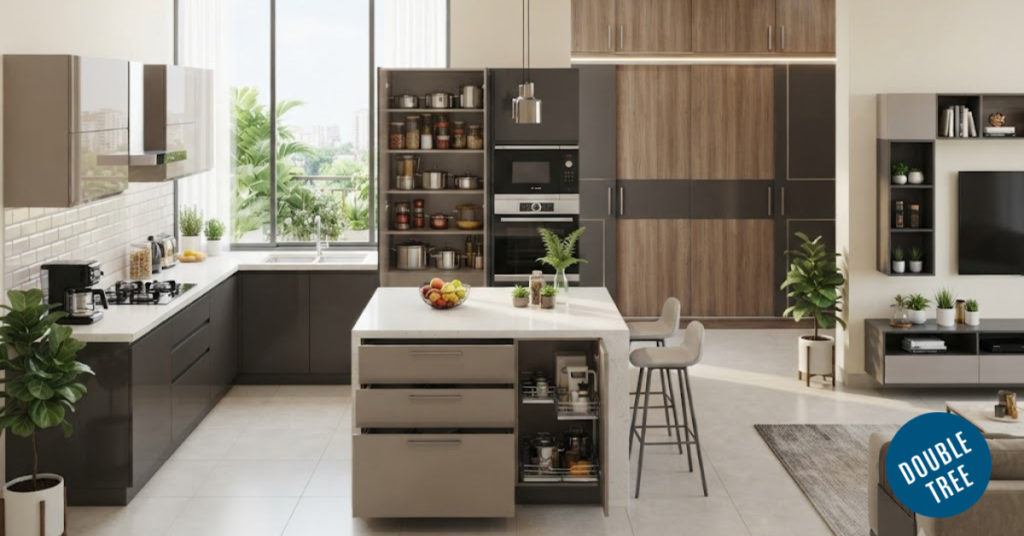
Layout is the first big decision, and it shapes everything else. The right choice depends on your room size, door and window positions, and how you actually move around the space during a normal day.
Common modular layouts include:
- Straight (single wall): Best for narrow rooms and small apartments.
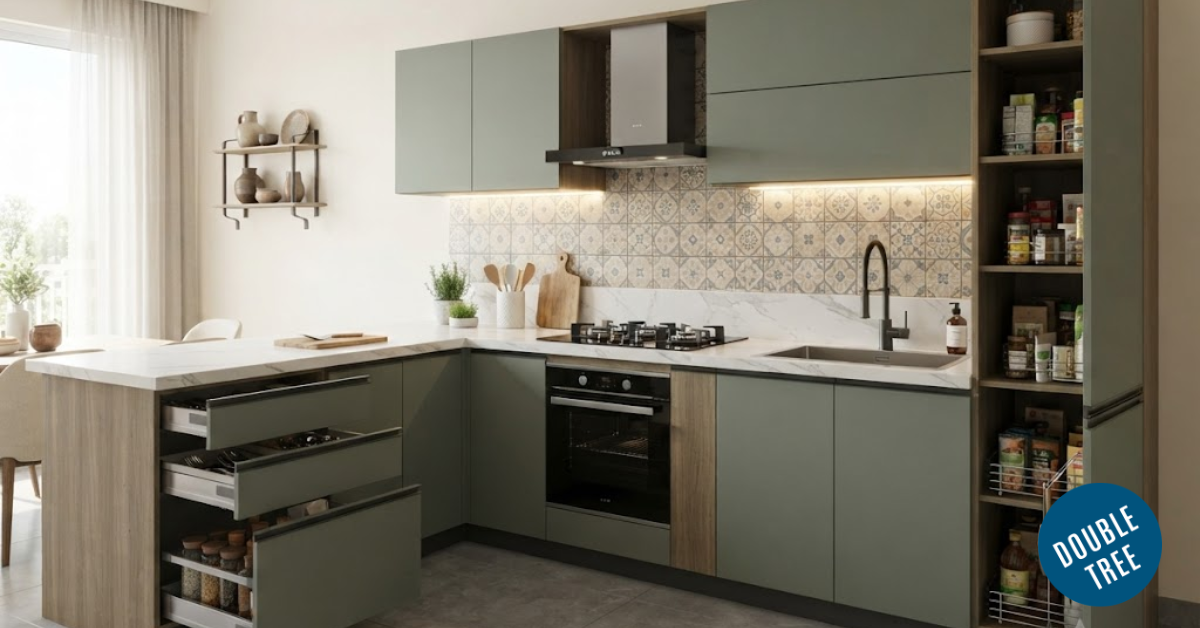
- L-shape: Uses two adjoining walls for strong corner use.
- U-shape: Wraps three walls for the most storage and counter area.
- Parallel (galley): Two facing runs, ideal for busy cooking zones.
- Island: A standalone unit for prep, seating, or extra storage.
Corner and small-space solutions matter just as much as the main shape. Blind corner units, magic corners, and slim filler cabinets use awkward gaps that fixed carpentry usually wastes. Because modules are separate units, you can also reconfigure or extend them later if you move or renovate.
Material Choices
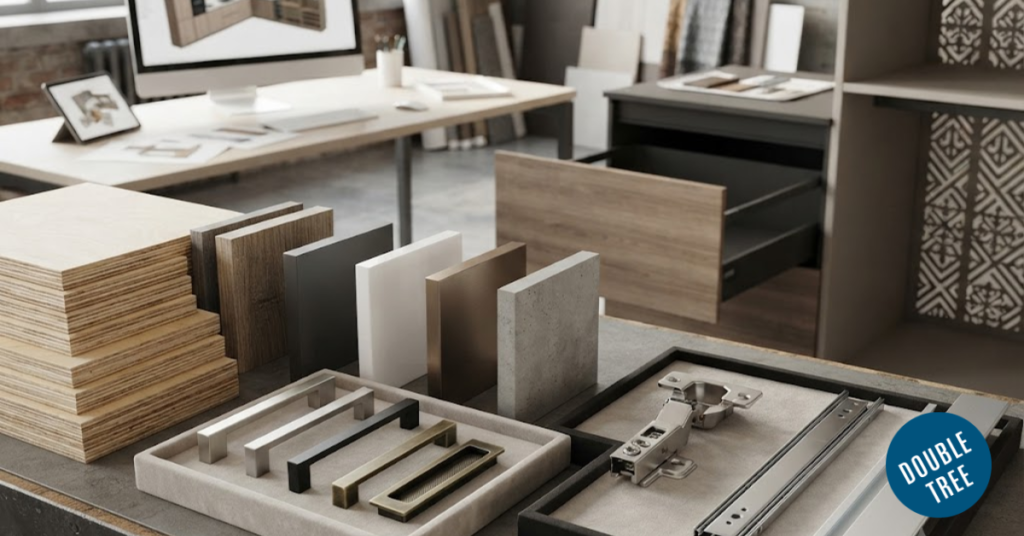
The core material behind the finish decides how long your furniture lasts. This is where cheaper jobs quietly cut corners, so it deserves your attention before you fall in love with a color.
Your main core options are:
- Plywood: Strong, moisture-resistant, holds screws and weight well over years.
- MDF: Smooth surface for finishes, but weaker against water and sagging.
- Particle board: Cheapest and lightest, but poor with moisture and load.
For anything near water, like a kitchen or wardrobe base, calibrated plywood is the safest core. Calibration means the boards are sanded to a uniform thickness, so cabinets sit flush and hardware fits precisely. At Double Tree Kitchens, we source club prime, calibrated plywood directly through our parent company, Kuldeep Plywood Industries, which keeps quality and supply steady on every project.
Finish and Surface Options
The finish is what you see and touch every day, and it sets the whole look of the room. Each type carries a different feel, price, and maintenance level, so it pays to understand the trade-offs.
Popular surface finishes include:
- Laminate: Durable, scratch-resistant, huge range of colors and textures.
- Acrylic: High-gloss, mirror-like, premium modern look.
- PU (polyurethane): Rich painted finish, smooth, fully custom in shade.
- Membrane: Seamless moulded finish, good for classic and shaker styles.
- Veneer: Real wood layer for a natural, warm grain.
Beyond material, you also choose the mood. Matte finishes hide fingerprints and feel understated, while glossy ones reflect light and make small rooms feel larger. Textured surfaces like wood grain or stone effect add depth without much extra cost.
Storage and Internal Accessories
Two kitchens can look identical from outside and work completely differently inside. Internal fittings are where daily convenience is won or lost, so plan them as carefully as the exterior.
Useful storage additions include:
- Pull-out units for bottles, oils, and pantry items.
- Tall units for brooms, groceries, or built-in appliances.
- Corner carousels and magic corners to reach deep blind spaces.
- Cutlery trays and cutout organizers for tidy drawers.
- Hidden waste bins and wicker baskets behind cabinet doors.
Movement hardware belongs here too. Soft-close hinges and channels stop slamming, reduce wear, and make a cabinet feel far more solid than its price suggests. These are small choices you notice every single day.
Hardware and Handle Customization
Handles and hinges are the details that quietly signal quality, and they change a design’s style more than people expect. The choice you make here sets the tone for the entire face of your furniture.
You can pick between two broad directions:
- Handle-based designs: Classic pulls and knobs in metal, matte black, brass, or wood.
- Handleless designs: Groove profiles or push-to-open systems for a clean, seamless face.
Under the surface, hinge and channel quality decides how long doors stay aligned and how smoothly drawers glide. Good brands cost a little more upfront but save you repair headaches for years, so ask which hardware and warranty you are getting before you sign off.
Color and Theme Customization
Color ties your furniture to the rest of the home and makes the room feel planned rather than pieced together. A scheme that follows your flooring, walls, or living area keeps everything looking connected.
A few directions that work well:
- Two-tone combinations: Darker base cabinets with lighter uppers for balance and depth.
- Neutral with accents: Whites, greys, and beiges paired with one bold color for personality.
- Matched to interiors: Tones picked straight from your existing decor and finishes.
Current trends lean toward warm woods, muted greens, and soft matte neutrals. Customization means you are never locked into a trend though, so choose a palette that will still look right to you in five years.
Made-to-Measure vs Ready Modular
Not all modular furniture is truly custom. Ready modular uses fixed standard sizes off the shelf, which is faster and cheaper but often leaves filler gaps and wasted corners in real rooms.
Made-to-measure modular is built after your space is physically measured, so cabinets match your exact walls, ceiling height, and appliance sizes. For irregular Indian rooms with pillars, beams, and odd corners, this measurement-first approach almost always gives a cleaner fit and better storage.
How the Customization Process Works
Good customization follows a clear order, and skipping steps is where mistakes and cost overruns creep in. Seeing a 3D design before manufacturing is the safeguard that protects you, because it lets you catch problems while they are still just pixels.
A typical Double Tree Kitchens process runs like this:
- Consultation to understand your needs, budget, and style.
- 2D and 3D design so you see the layout before anything is built.
- On-site measurement to lock exact dimensions.
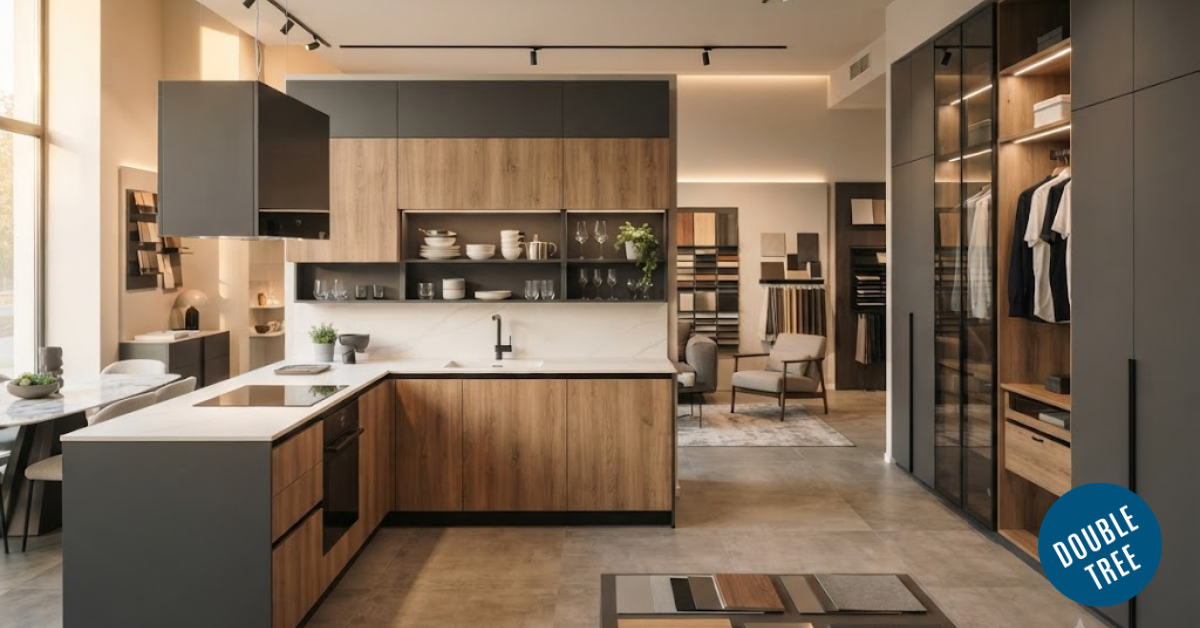
- Material and finish selection for core, surface, and hardware.
- Factory manufacturing of the modules.
- Installation by a skilled team on-site.
Getting a Modular Design That Fits You
Customization is the line between furniture that is merely good and furniture that is right for your home. Layout, core material, finish, internal accessories, and hardware each pull the result in a different direction, and together they decide how it looks and how long it lasts.
If you are planning a modular kitchen in Lucknow, Double Tree Kitchens handles the full journey from design session to installation, with in-house access to premium calibrated plywood through Kuldeep Plywood Industries. Reach out for a consultation and a 2D or 3D design tailored to your space.