
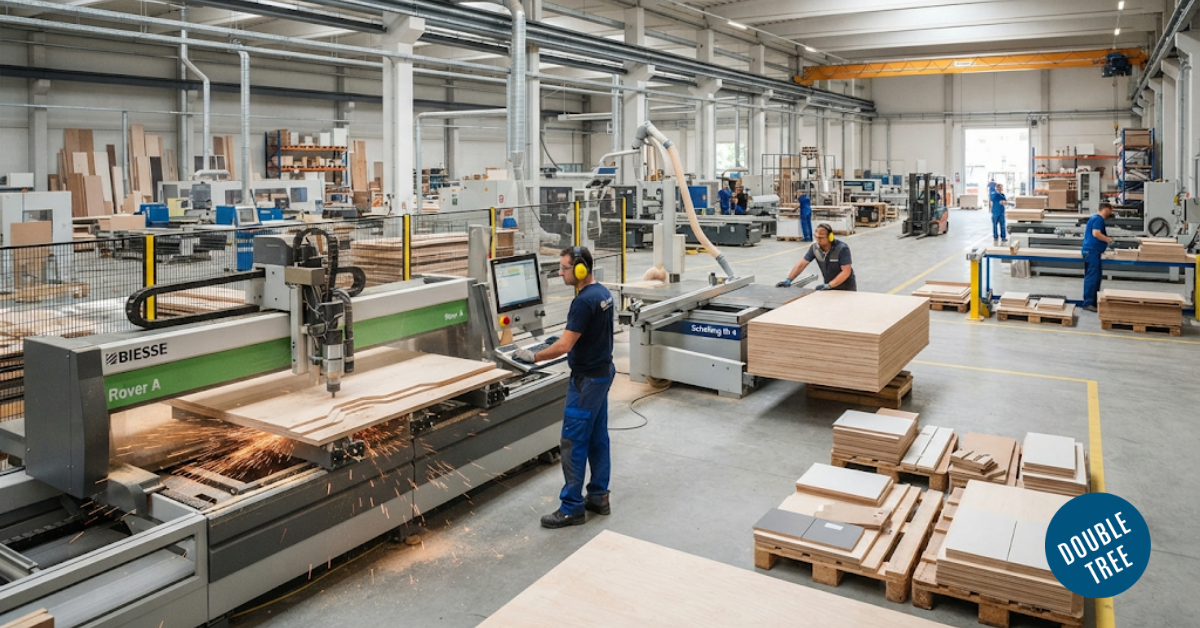
Most people judge a modular kitchen by its finish, but the real story starts in the factory, on the machines that cut, drill, and seal every panel. Buyers rarely see this stage, yet the machinery behind a kitchen decides its precision, speed, and how long it lasts.
Understanding the cost and efficiency of modular furniture machines explains why some kitchens fit perfectly and hold up for years while others do not. This guide looks at the main machines, what they cost to run, and the efficiency they bring to the build.
Why Machines Decide Modular Furniture Quality
Hand tools depend on the skill and mood of one carpenter on a given day, so results vary from panel to panel. Factory machines remove that guesswork by producing the same cut, the same hole, and the same edge every single time.
This repeatable accuracy is the whole point of modular furniture. When every unit is made to tight tolerances, the parts fit together cleanly on-site, gaps stay even, and the finished kitchen feels solid rather than pieced together.
Core Modular Furniture Machines and Their Role
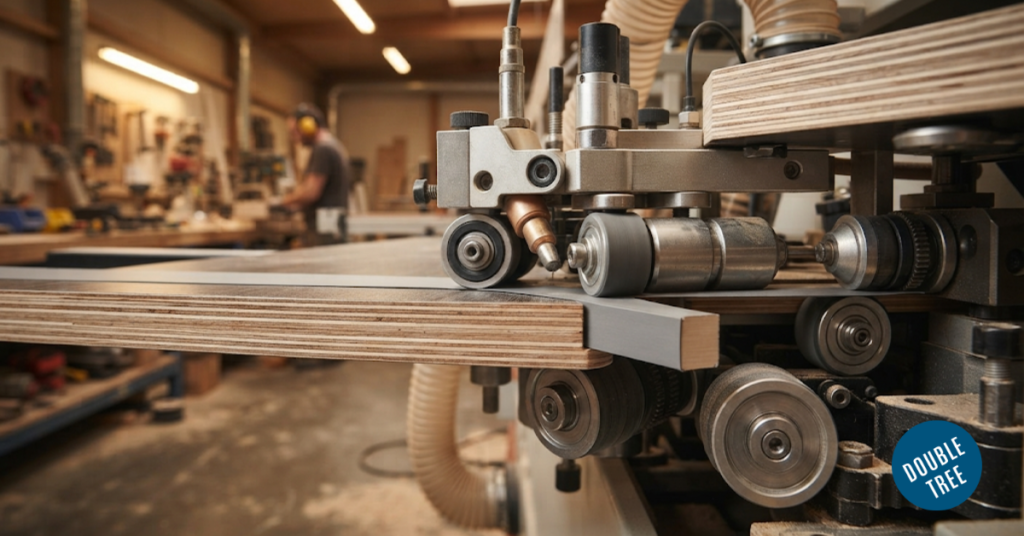
A modular factory runs on a chain of machines, each handling one stage of the build. Together they turn raw plywood boards into finished, ready-to-assemble units, and a weak link anywhere shows up later as a loose hinge or a swollen edge.
The main machines include:
- Panel saw: cuts boards to exact size with clean, square edges
- Edge banding machine: seals exposed edges against moisture for a durable finish
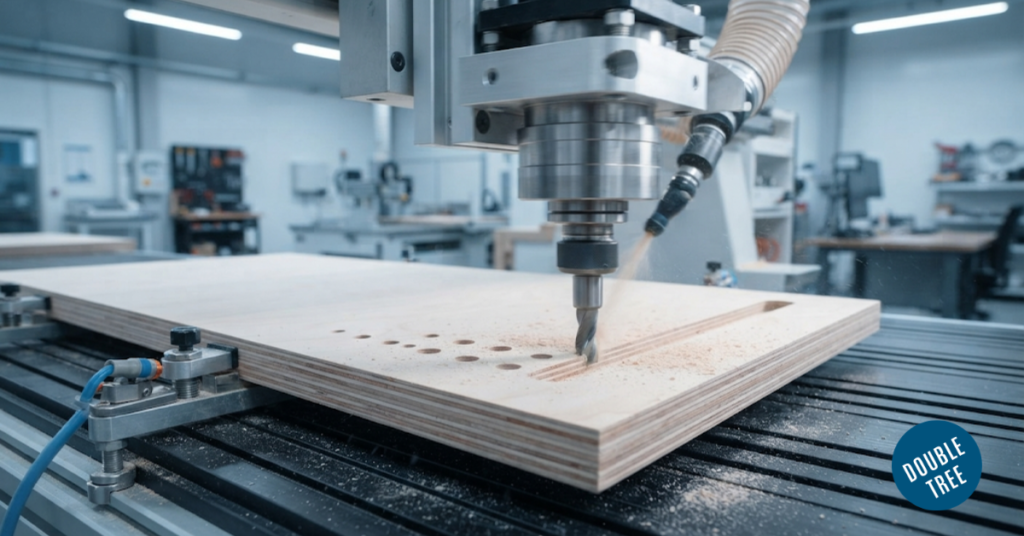
- CNC router or drilling machine: makes precise holes and grooves for hinges and fittings
- Pressing and lamination machines: bond laminates to the core without bubbles or gaps
- Support tools: boring machines, hinge-hole drills, and trimmers for the finishing work
What Modular Furniture Machines Cost
Machine cost is not a single number, because it depends heavily on how automated and how capable the equipment is. A small workshop and a full factory can both make modular units, but their setups sit at very different price levels.
The main factors that drive machine cost are:
- Automation level: manual and semi-automatic machines cost far less than full CNC systems
- Brand and build quality: established brands cost more but hold accuracy longer
- Output capacity: larger, faster machines built for volume carry higher prices
- Origin: imported machinery usually costs more than locally made equivalents
Beyond the purchase price, running costs add up over time, including power, maintenance, skilled operators, and consumables like blades and edge-banding tape. A cheaper machine that needs frequent repair or wastes material can cost more per unit than a pricier one that runs cleanly for years.
The Efficiency These Machines Deliver
Efficiency is where good machines earn back their cost. A factory line can produce in a day what a carpenter might take a week to build by hand, and it does so with far more consistency and less rework.
The main efficiency gains show up as:
- Speed: panels are cut, drilled, and banded in minutes, not hours
- Consistency: the same result every time means fewer rejected pieces
- Material savings: precise cutting reduces waste from every board
- Labour efficiency: a small trained team can produce more than a larger manual crew
Spread across thousands of panels, these gains lower the real cost of each cabinet well below what hand-building the same work would demand. Because the units are more uniform, installation is smoother and there are fewer callbacks after a kitchen is fitted.
Balancing Cost Against Efficiency
The real question for any maker is not simply cheap versus expensive, but output against investment. A machine only pays off when there is enough volume to keep it busy.
A high-volume manufacturer can justify full CNC equipment because the speed and consistency serve many kitchens each month. A smaller shop might start with semi-automatic machines and grow into heavier equipment as demand rises, so the right choice is a scaling decision matched to real output.
What This Means for You as a Buyer
For a homeowner, all of this comes back to one point: the machines and material behind a kitchen decide its quality. A maker with proper factory equipment can hold tight tolerances, so your cabinets fit precisely, your edges stay sealed, and your hinges sit true.
Steady material supply matters just as much as the machines. At Double Tree Kitchens, the plywood comes through our parent company, Kuldeep Plywood Industries, which keeps the core material consistent and available on time. Good machines working on club prime, calibrated plywood are what produce a kitchen that lasts rather than one that only looks right on day one.
Why the Factory Behind Your Kitchen Matters
The cost and efficiency of modular furniture machines rarely reach the customer’s eye, yet they shape everything you touch in a finished kitchen. Precise cuts, sealed edges, accurate drilling, and clean lamination all trace back to the equipment and material choices made long before installation day.
If you are planning a modular kitchen, choose a maker who runs on proper machinery and reliable material supply. Double Tree Kitchens builds contemporary modular kitchens to order from our own Lucknow factory, with precise measurement, machine-cut units, and 2D/3D design before any cutting begins. Reach out for a consultation and see how a well-run factory turns into a kitchen built to last.